How often should a fire alarm be serviced?
BS 5839-1 recommends commercial fire alarm systems are serviced at least every six months by a competent person, split into two visits a year. Domestic and HMO systems under BS 5839-6 should be professionally checked annually. In both cases the responsible person should also carry out a weekly user test of a different call point each week.
How much does fire alarm servicing cost in London?
Fire alarm servicing is from £180 + VAT a visit for a conventional system and £240 + VAT for an addressable system, every six months, with a certificate issued each time. An emergency lighting test is £150 + VAT. Larger buildings are priced per device after a free survey.
Can you service a system another company installed?
Yes, and it is a large part of what we do. We survey the existing installation, give you an honest condition report and a list of any remedial work needed, then take it onto a maintenance contract. There is no requirement to replace equipment that is working.
What happens during a fire alarm service visit?
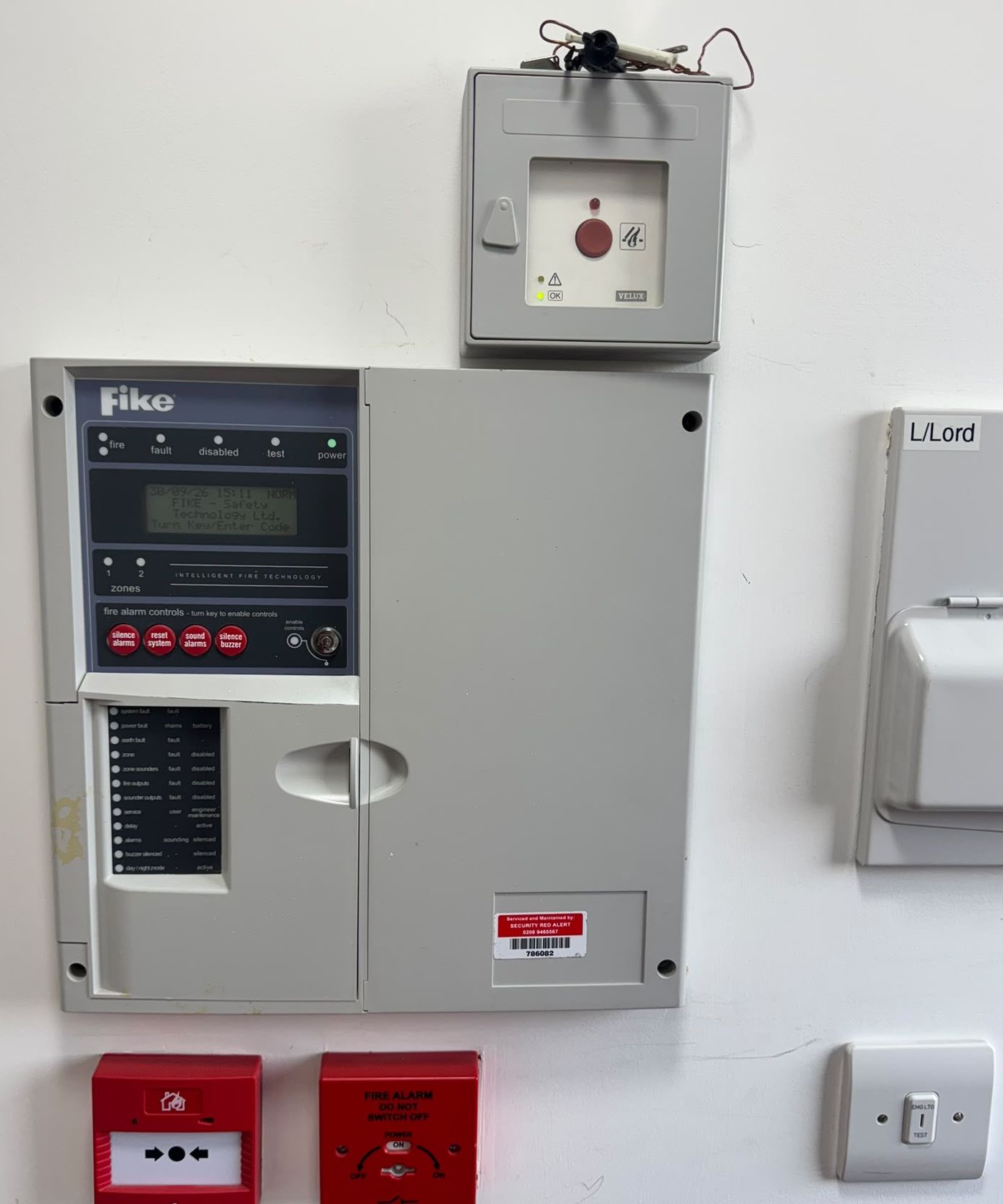
We test a proportion of the detectors and call points so that every device is covered across the year, check the panel for faults, test sounders and any linked systems such as door releases or smoke vents, inspect batteries and power supplies, review the fault and event log, and complete the logbook. You receive a certificate and a written record of everything tested.
What happens if my fire alarm servicing has lapsed?
It can be brought back into date. We carry out a full inspection, identify anything that has failed since the last service, quote for the remedials and then recertify. Insurers and licensing officers generally want to see that a lapse has been corrected and a schedule resumed, rather than that it never happened.
Do you cover emergency lighting and extinguishers too?
Yes. Emergency lighting, extinguisher servicing under BS 5306 and AOV smoke ventilation under BS 7346-8 can all sit on the same schedule and the same visit, so you deal with one contractor and one set of certificates instead of three.