

Fire Alarms for Care Homes
Installation, six-monthly servicing and emergency lighting for care homes, nursing homes and supported living across London, planned around your residents and staff.
- BS 5839-1 systems
- Work planned around residents
- Certificates on the day
Request a call back
Name and number are all we need to arrange a call back and a free survey.
- SSAIB approved for intruder alarmsFor intruder alarms
- BS 5839 fire alarmsCertificated every visit
- Since 2001Family-run in SW17
- 20+ five-starGoogle reviews
What it costs
Servicing
- Fire alarm from £180 + VAT a visit
- Emergency lighting £150 + VAT
New systems
- Fire alarm from £1,200 + VAT
- Smoke alarms from £230 + VAT
A free site survey comes first, then a fixed written quotation. Larger buildings are priced per device.
Residents who cannot get out on their own
In a care home many residents need help to leave, some are asleep, and some will be confused by a loud alarm. The fire alarm has to find a fire early and tell staff exactly where it is, so they can move people away from it.
We design, install and service fire alarm systems to BS 5839-1 for care homes and nursing homes, and to BS 5839-1 or BS 5839-6 for smaller supported living houses, depending on the size and the fire risk assessment. We work around residents and staff, agree when the sounders will be tested, and leave certificates and records you can show the CQC, the fire service and your insurer.
What we do for care homes
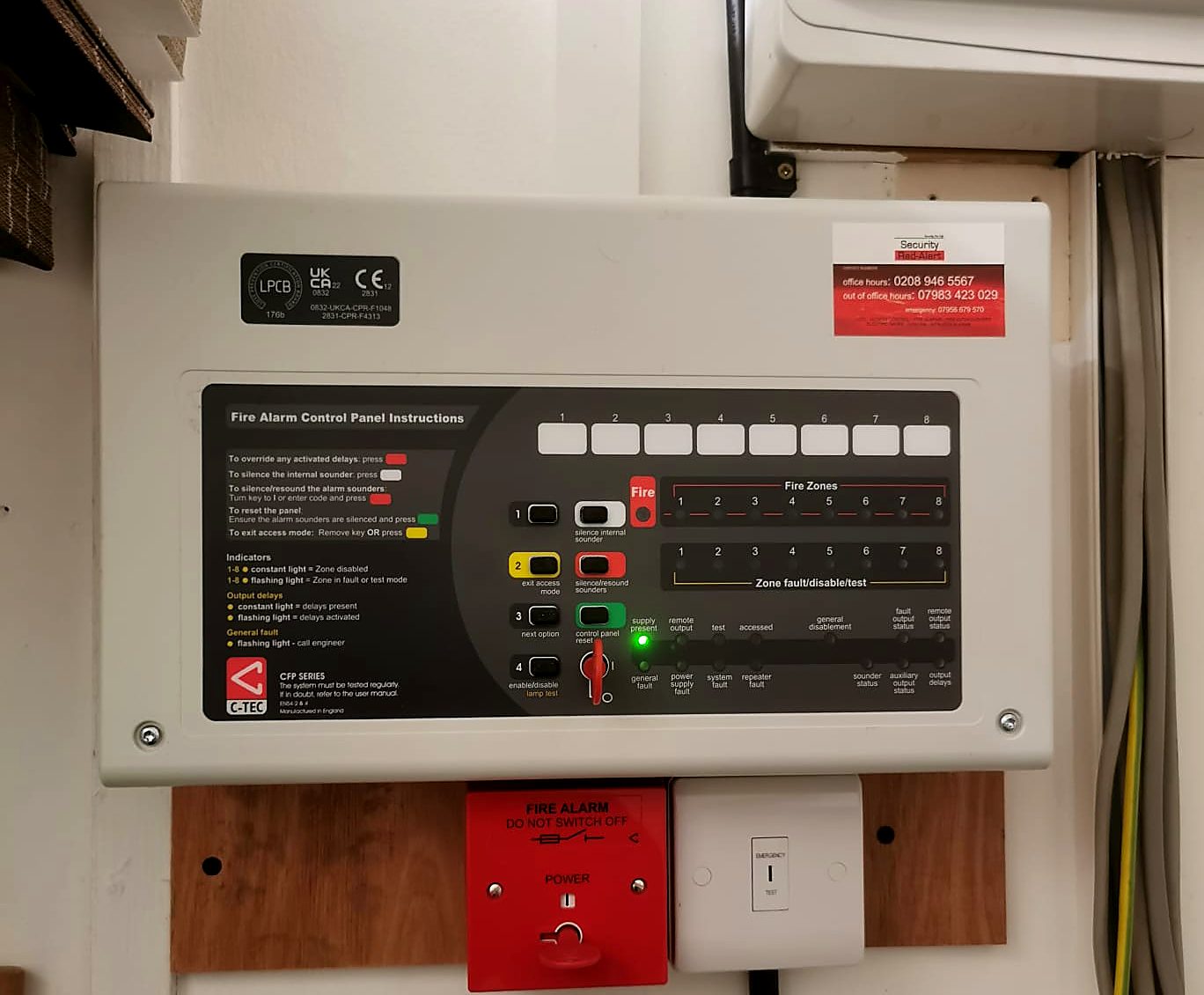
- Addressable systems that show staff the exact room on the panel
- Detection throughout the building, as care homes usually need
- Door hold-open devices that release fire doors on alarm
- Multi-sensor detectors to cut false alarms from steam and aerosols
- Six-monthly servicing with sounder tests agreed with the manager
- Annual emergency lighting test on the same visit
- Weekly test routine and logbook set up for staff
- Takeover of systems installed by any company
What you get from working with us
The Exact Room, Not a Zone
An addressable panel shows staff the room the alarm came from, so they go straight there and start moving residents away from the fire instead of searching a whole floor.
Fewer False Alarms
False alarms wake and frighten residents and wear down staff. Multi-sensor detectors and the right detector in bathrooms and kitchens stop most of them.
Work Planned Around Residents
We agree with the manager when the noisy tests happen, work room by room, and keep corridors clear. Residents' routines come first.
Records Ready for Inspection
Certificates on the day, the logbook kept up to date and a written list of anything that failed, so you always have the evidence when the CQC or the fire service asks.
How a care home fire alarm differs
Most care homes plan for progressive horizontal evacuation: residents are moved through fire doors into the next compartment on the same floor rather than out of the building. That only works if the alarm pinpoints the fire quickly and the fire doors close on alarm, so we pay particular attention to device addresses, zone plans and door hold-open devices.
The category of system comes from your fire risk assessment, but care homes usually need detection in every room, including bedrooms, so a fire is found while it is still small. We design to that and certificate the system at handover.
Servicing without upsetting the home
We service care home systems every six months to BS 5839-1 and test the emergency lighting once a year. Servicing is from £180 + VAT a visit for a conventional system and £240 + VAT for an addressable system, and the annual emergency lighting test is £150 + VAT on the same visit. Larger homes are priced after a free survey.
Before each visit we agree a plan with the manager: which areas first, when the sounders will be heard and for how long, and which staff will be with us. We test in sections so the home is never left without cover.
Frequently Asked Questions
What type of fire alarm does a care home need?
Usually a BS 5839-1 system with detection throughout the building, set by your fire risk assessment. Addressable systems are the norm in anything but the smallest homes because they show staff the exact location of the alarm.
How often should a care home fire alarm be serviced?
At least every six months to BS 5839-1, with a weekly call point test by staff recorded in the logbook and the emergency lighting fully tested once a year.
Can you service our fire alarm without disturbing residents?
We keep disruption to a minimum: sounder tests are short and agreed in advance, we test area by area and we work with your staff. Most residents notice very little.
Does the CQC look at fire alarm servicing?
Fire safety is part of how the CQC judges whether a service is safe, and inspectors can ask for servicing certificates and test records. The fire service can ask for them too. We leave certificates on the day so they are always on file.
We run small supported living houses. Do they need the same system?
Not always. A small supported living house may be suited to a BS 5839-6 system, depending on who lives there and the fire risk assessment. We survey and recommend the right grade and category, with a fixed price.
Get a free care home survey
Tell us about the building and we will call you back to book a free, no-obligation survey. You get a fixed written quote after every visit.
- BS 5839-1 systems
- Work planned around residents
- Certificates on the day
Phone answered 24/7