
Landlords & HMOs
BS 5839-6 Compliance, Certificated for Licensing
- Free survey, fixed written quote
- SSAIB approved for intruder alarms
- 20+ years in London
Request a call back
Name and number are all we need. We call back within one working day to book a free survey.
- SSAIB approvedFor intruder alarms
- BS 5839 fire alarmsCertificated every visit
- Since 2004Family-run in SW17
- 20+ five-starGoogle reviews
How we work
Fire safety compliance for London landlords, letting agents and HMO operators. We install and service the interlinked alarm systems your licence requires, issue the certificates your council and insurer ask for, and keep every property in your portfolio on one renewal schedule so nothing quietly lapses between tenancies.
What's included
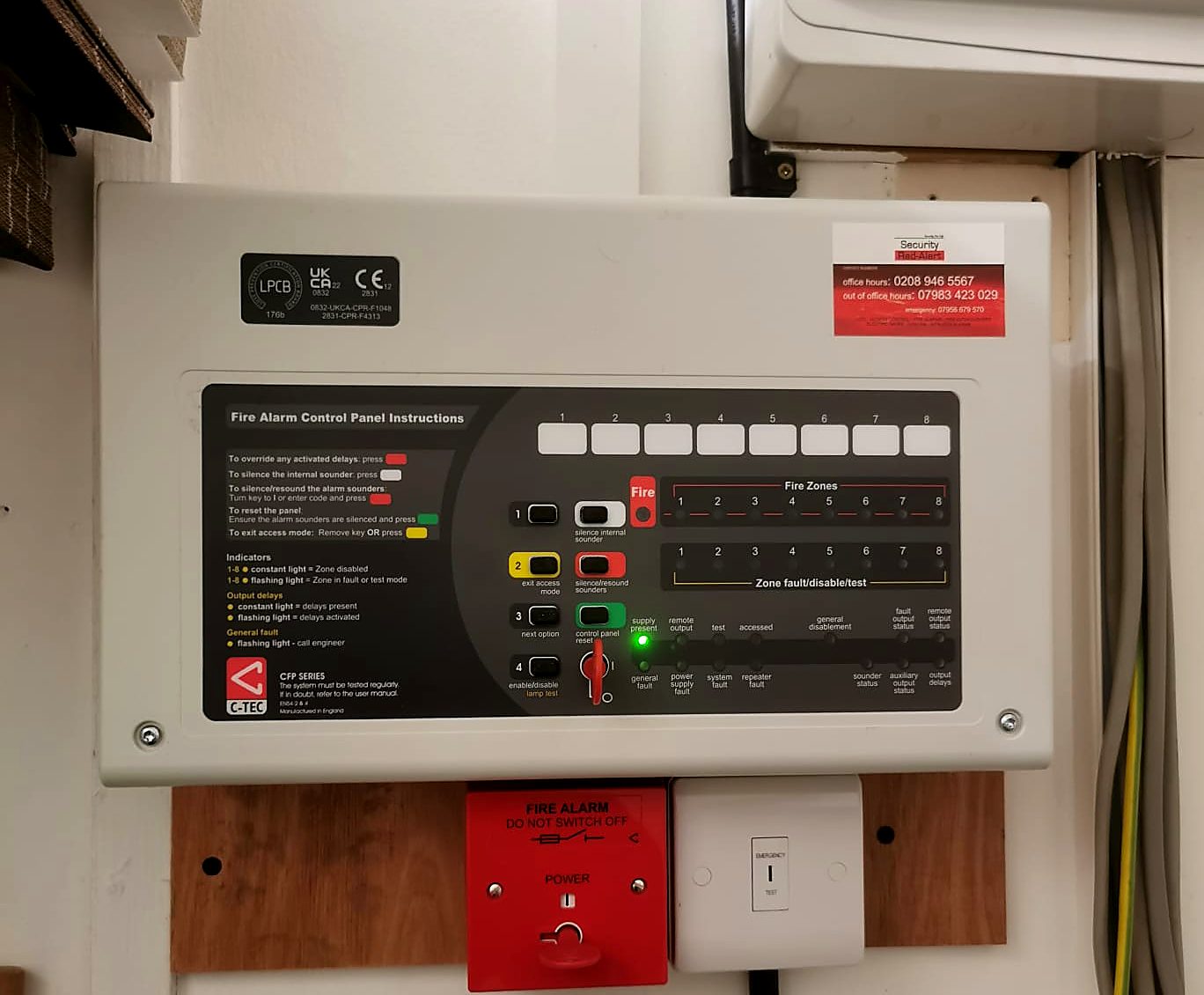
- Grade D LD2 interlinked fire alarm systems for licensed HMOs
- Interlinked smoke and heat alarms for single-family rentals
- Carbon monoxide detection in rooms with fuel-burning appliances
- Emergency lighting to escape routes and communal areas
- Fire door and extinguisher provision where the FRA requires it
- Annual servicing with certificates for licensing inspections
- Portfolio scheduling — all properties on one renewal calendar
- Same-day callout for failed alarms in tenanted property
What you get from working with us
Certificates Your Licensing Officer Accepts
Councils ask for documented evidence, not assurances. Every install and service produces a certificate naming the grade and category of system fitted, which is what gets accepted at HMO licensing inspection and by your insurer.
We Specify the Right Grade
Over-specifying wastes money; under-specifying fails inspection. We survey the property, establish what BS 5839-6 actually requires for its layout and occupancy, and quote that — not a package.
Built Around Tenanted Property
Working in occupied homes is a logistics problem as much as a technical one. We book around tenants, keep visits short, and use wireless systems where cabling would mean lifting floors in a furnished let.
One Contractor for the Portfolio
Fire alarms, emergency lighting, extinguishers and electrical testing across every property you own, on one schedule with one point of contact. Landlords with several properties spend less time chasing certificates than contractors.
What We Cover for Rented Property
Licensed HMOs
Grade D LD2 interlinked systems as standard, or Grade A panel systems for larger houses in multiple occupation. Includes heat detection in kitchens, emergency lighting to escape routes where required, and certification timed around your licensing inspection.
Single-family lets and flats
Interlinked smoke and heat alarms plus carbon monoxide detection where there is a fuel-burning appliance. Wireless Grade D systems suit furnished lets and period conversions where running cable would mean lifting floors.
Student and shared housing
Higher occupancy means more cooking, more nuisance alarms and more wear. We position and specify detectors to cut false activations, because tenants who are fed up with a screaming alarm disconnect it — which is how properties end up unprotected between inspections.
Portfolios
If you own several properties, we hold the servicing calendar and contact you before each is due. One contractor, one schedule, and certificates filed consistently rather than scattered across years of different tradespeople. If you manage HMOs for other landlords, see our dedicated page for HMO management companies and letting agents.
Frequently Asked Questions
What fire alarm system does a licensed HMO need?
Most licensed HMOs in London need a Grade D, Category LD2 system under BS 5839-6 — mains-powered interlinked smoke alarms in escape routes and circulation areas, plus heat alarms in kitchens. Larger or higher-risk HMOs may need a Grade A panel system. The property's fire risk assessment and the council's licensing conditions determine which, and we confirm it at survey.
What is the difference between LD1, LD2 and LD3?
LD3 covers escape routes only. LD2 adds high-risk rooms such as kitchens and living rooms — this is the usual minimum for licensed HMOs. LD1 covers every room and circulation space. Councils generally specify LD2 for shared houses, but always check your own licensing conditions.
Do I legally need interlinked alarms in a rented house?
In England, rented homes need at least one smoke alarm on every storey used as living accommodation, plus a carbon monoxide alarm in any room with a fixed combustion appliance other than a gas cooker. Interlinking is not universally mandated for single-family lets in England, but it is strongly recommended and is required for most HMOs. Scotland and Wales have stricter rules.
How much does an HMO fire alarm system cost?
A Grade D LD2 system for a typical shared house is from £600 installed and certificated, depending on the number of storeys and rooms. Annual servicing is usually £80–£150 per property. Larger HMOs needing a Grade A panel system are quoted after survey. Every job gets a fixed price before work starts.
My tenants keep setting the alarm off. What can be done?
Nuisance alarms are almost always a detector placement or detector type problem — an optical smoke alarm too close to a kitchen or bathroom is the classic cause. Repositioning, or swapping to a heat alarm where appropriate, usually fixes it. It matters, because tenants who are fed up with false alarms disconnect them.
Can you certificate a property before a licensing inspection?
Yes. Tell us the inspection date and we will survey, carry out any work needed and issue certification ahead of it. If the property already has a system, we can inspect and certificate it without replacing anything, provided it meets the required grade and category.
Arrange a free site survey
Tell us about the building and we will call you back to book a free, no-obligation survey. You get a fixed written quote after every visit.
- Free survey, fixed written quote
- SSAIB approved for intruder alarms
- 20+ years in London
Phone answered 24/7