Open now: answered every dayOpen now: calls answered 24/7, forms and quotes answered every day, including weekends
Call us: 020 8946 5567

Weekly Fire Alarm Testing, Done for You
BS 5839-1 recommends a fire alarm test every week, and the Fire Safety Order puts the duty on the responsible person. If your team cannot keep it up, our engineer can do it for you at a regular time each week and keep the log book up to date.
- Weekly tests to BS 5839-1
- Log book kept up to date
- From £70 + VAT a visit
Request a call back
Name and number are all we need to arrange a call back and a free survey.
- SSAIB approved for intruder alarmsFor intruder alarms
- BS 5839 fire alarmsCertificated every visit
- Since 2001Family-run in SW17
- 20+ five-starGoogle reviews
What it costs
Servicing
- Fire alarm from £180 + VAT a visit
- Emergency lighting £150 + VAT
New systems
- Fire alarm from £1,200 + VAT
- Smoke alarms from £230 + VAT
A free site survey comes first, then a fixed written quotation. Larger buildings are priced per device.
Why more businesses hand the weekly test over
The weekly test is simple, but it has to happen every single week, at about the same time, with a different manual call point each time, and it has to be written down. Holidays, staff changes and busy weeks are when it slips, and a gap in the log book is exactly what an insurer or a fire officer notices.
Many fire alarm panels keep an event log, a bit like a black box, that records every activation, and a monitored system is also recorded at the alarm receiving centre. So whether the weekly test really happened is easy to check after the event. When we take the test over, an engineer visits at an agreed time each week, runs the test properly, checks the panel and writes it up, so the duty is covered and you can get on with running the business.
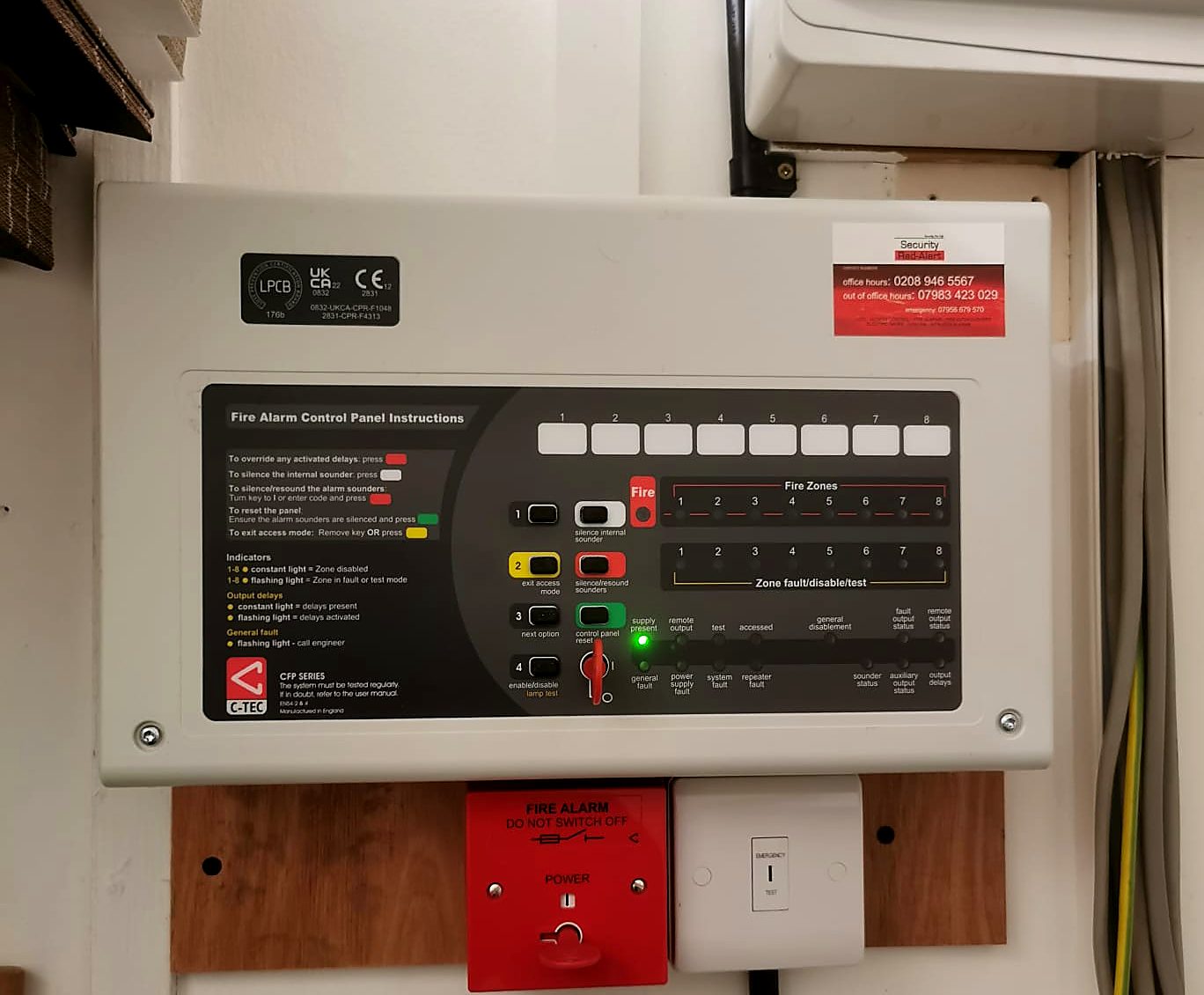
What we do on every weekly visit
- Tell the alarm receiving centre before the test and confirm the signal reached them
- Operate a different manual call point each week, in a recorded rotation
- Check the panel shows the right zone and device, and that the sounders and beacons operate
- Keep the alarm sounding for about a minute, so nobody mistakes a real fire for the test
- Reset the system and check the panel is back to normal with no faults showing
- Write up the log book and report any fault the same day, with a fixed price to fix it
What you get from working with us
Never Missed
A regular weekly slot with our engineer, so the test still happens when your own staff are away.
Proper Records
Every test written up in your fire alarm log book, the record insurers and fire officers ask to see.
Faults Found Early
A weekly look at the panel means a fault is spotted within days, not at the next six-monthly service.
Emergency Lighting Too
The monthly emergency lighting function check can be done on one of the weekly visits.
Who needs a weekly test
BS 5839-1 recommends that the fire alarm in commercial and other non-domestic premises is tested every week. The same goes for Grade A systems in residential buildings, such as larger HMOs, which follow BS 5839-1 for testing. The test should be at roughly the same time each week so people know it is a test, using a different manual call point each time so every call point is proved over the weeks.
The Regulatory Reform (Fire Safety) Order 2005 makes the responsible person keep fire safety equipment maintained in efficient working order. The British Standard is a recommendation rather than the law itself, but it is what fire risk assessors, insurers and the fire and rescue service measure you against, and the log book is how you show the tests are being done.
The record that shows it was done
After a fire, the log book is one of the first things the insurer and the fire and rescue service ask to see, and the panel's own history shows whether the weekly tests really took place. Gaps are hard to explain, and failing to keep fire safety equipment maintained can lead to enforcement action under the Fire Safety Order. A weekly visit from us leaves a clear, dated entry every week.
Monthly emergency lighting checks
BS 5266-1 recommends a short function test of every emergency light each month, switching it to battery and checking it lights, and a full-duration test once a year. We can do the monthly check on one of the weekly visits and record it in the emergency lighting log. The annual full-duration test is done at our service visit, with its own certificate.
The cost
A weekly fire alarm test is from £70 + VAT a visit across London, and from £85 + VAT in prime central postcodes such as W1, WC, EC and SW1. The price depends on the size of the building and the number of call points, and adding the monthly emergency lighting check is priced with the contract. You get a fixed written price before we start.
The weekly test does not replace the six-monthly service: BS 5839-1 still recommends an engineer's service at least every six months. Servicing is from £180 + VAT a visit for a conventional system and £240 + VAT for an addressable system, and the annual emergency lighting test is £150 + VAT on the same visit.
Frequently Asked Questions
Do we legally have to test the fire alarm every week?
The Fire Safety Order requires the responsible person to keep the fire alarm maintained in efficient working order. BS 5839-1, the standard that is used to judge that, recommends a weekly test, and fire risk assessments and insurers expect to see it in the log book.
Can our own staff do the weekly test instead?
Yes. Anyone you nominate can do it once shown how. Businesses hand it to us when there is nobody reliable on site every week, for example empty or part-let buildings, blocks with no caretaker, or small teams where holidays leave gaps.
How long does the test take?
The alarm itself should sound for only about a minute. With the panel checks, the reset and the log book the visit is short, and we agree a regular time each week that suits your building.
What happens if the test finds a fault?
We tell you what is wrong the same day and give you a fixed price to fix it before any work is done.
Does this replace the six-monthly service?
No. The weekly test checks the system works; the six-monthly service is a full engineer's inspection of the panel, batteries and devices, and comes with a certificate. We can do both.
Do you test systems another company installed?
Yes. We test and service conventional, addressable and wireless systems from the common manufacturers, whoever installed them.
Get a price for weekly fire alarm testing
Tell us about the building and we will call you back to book a free, no-obligation survey. You get a fixed written quote after every visit.
- Weekly tests to BS 5839-1
- Log book kept up to date
- From £70 + VAT a visit
Answered 24/7. Forms and quotes answered every day, including weekends
Answered 24/7. Forms and quotes replied to every day, including weekends